What Is a Flexible Workspace? (And Why Startups Are Choosing Them Over Traditional Leases)
A plain-English explainer on flexible workspaces — what the term means, how they compare to traditional office leases, and the real cost math for a 5-person team.
"Flexible workspace" is a phrase that's started showing up everywhere — in startup pitch decks, commercial real estate reports, and the vocabulary of founders who have never signed a commercial lease in their lives. It's used to describe everything from a single hot desk to a 50-person private office.
If you're trying to figure out whether a flexible workspace is right for your company, the first problem is that the term doesn't have a single sharp definition. This post unpacks what it actually means, compares it against a traditional commercial lease, and walks through the real cost math for a small team — so you can decide whether "flex" is a fit or a marketing buzzword.
What Does "Flexible Workspace" Actually Mean?
A flexible workspace (sometimes called a flex office, a flexspace, or a flexible office space) is any office arrangement that replaces the long-term commercial lease with something shorter, simpler, and more adaptable. In practice, that covers four patterns you'll see at most operators:
- Coworking memberships — hot desks or dedicated desks in a shared room, paid month-to-month.
- Private offices on flex terms — a furnished office for your team, with no multi-year lease, utilities and services included.
- Virtual offices — no physical desk, just a professional business address, mail handling, and occasional on-demand workspace access.
- Meeting rooms and day passes — hourly or daily rentals for teams that don't need a permanent footprint at all.
The unifying feature across all of them is the same: the term is short, the room is furnished, the bill is bundled. Instead of signing a 5- or 10-year lease, building out the space, hiring an office manager, paying separate utility accounts, and buying desks, you pay a single monthly fee and everything is handled.
That "everything is handled" part is where flex earns its name. You can scale up, scale down, or leave with a notice period measured in weeks rather than years.
What a Traditional Commercial Lease Looks Like
A traditional office lease in Las Vegas — or most U.S. markets — comes with a specific set of commitments. Not all of them are expensive in isolation. Taken together, they add up fast and lock you in for years.
- Term length. Standard commercial leases run 3 to 10 years. The shortest terms typically available are 12 months, and those come with a premium.
- Base rent. Quoted per square foot, per year. In 2026-era Las Vegas, Class B office space runs roughly $25–$35 per square foot annually, depending on location and finish.
- Operating expenses (NNN). Property taxes, insurance, common-area maintenance — usually passed through on top of base rent.
- Build-out. You take the space as an empty shell or with someone else's old carpet. You pay to reconfigure it, paint it, run cabling, sometimes build walls.
- Furniture. Desks, chairs, conference room tables, monitors. Not included.
- Utilities and internet. Separate accounts you open and pay.
- Cleaning and maintenance. You hire it or pay a janitorial service.
- Security deposit. Often equal to multiple months of rent, held for the life of the lease.
- Personal guarantee. For newer companies, landlords commonly ask a principal to personally guarantee the lease. If the business fails, you pay out of pocket.
None of that is inherently bad — it's how commercial real estate has worked for a long time. But it assumes you know, today, how much space you'll need three years from now. For a five-person team that might be eight people by the end of the year (or four, if a funding round doesn't land), that assumption is hard to make honestly.
The Math: A 5-Person Team, 12 Months
Here's a rough comparison for a five-person team in Las Vegas over a year. The flexible workspace numbers use published Muze Office pricing. The traditional lease numbers are ballpark figures for comparable Class B space and are directional only — actual lease terms vary widely.
Flexible workspace: Muze Office Team Office (2–4 people) or Custom Suite (5+)
| Line item | Notes |
|---|---|
| Monthly fee | Custom quote depending on room — see pricing below |
| Furniture | Included |
| Utilities | Included |
| Internet | Included |
| Cleaning | Included |
| Parking | Included |
| Meeting room credits | Included |
| Business address & mail | Included |
| Receptionist | Included |
| Security deposit | Usually one month |
| Commitment | Month-to-month |
Traditional commercial lease: ~700 sq ft for 5 people, Class B Las Vegas space
| Line item | Rough 12-month figure (directional) |
|---|---|
| Base rent ($28/sq ft × 700 sq ft) | ~$19,600 |
| NNN passthrough (~$8/sq ft) | ~$5,600 |
| Utilities (electric, gas, water) | ~$3,000 |
| Internet (business-class) | ~$1,200 |
| Furniture (desks, chairs, conference table) | ~$8,000–$15,000 one-time |
| Janitorial | ~$3,000 |
| Build-out or paint | Variable — $0 to tens of thousands |
| Security deposit | 2–3 months base rent |
| Commitment | 3–10 years, often with personal guarantee |
The flex-workspace side is a single check every month. The traditional-lease side has more line items, bigger one-time costs up front, and a commitment that outlives most startups' current plans.
For a team that's sure of its headcount and will stay put for five years, the traditional lease can come in cheaper on base rent alone. For a team that doesn't know its headcount a year from now, the real comparison isn't just dollars — it's the cost of being wrong.
Where Flex Pays for Itself
Three situations are where the flex-office math tends to win clearly:
1. You're growing or shrinking. A team that doubles mid-year can't renegotiate a signed lease. A team that loses a major contract and needs to cut burn can't walk away from one either. Flex workspaces let you move rooms, take a second office down the hall, or drop back to hot desks without penalty.
2. You don't have the cash for build-out and furniture. Combining first month, last month, security deposit, build-out, and furniture, a traditional lease often requires $30K–$80K up front before you've worked a single day in the space. A flex office typically asks one month of rent.
3. Your team is distributed. If half the company works remotely and only comes in two days a week, you're renting a huge footprint that sits empty most of the time under a traditional lease. Flex lets you right-size to the days the team actually shows up.
Where Traditional Still Wins
Flex isn't a universal answer. Traditional leases still make sense when:
- You need 5,000+ sq ft. Above a certain size, flex operators struggle to compete on price per square foot.
- You require total control over the physical space — heavy equipment, a retail component, specialized venting, or a build-out that only makes sense for your business.
- Your company has been at the same headcount for years and expects to stay there.
- You want to own the leasehold improvements as a tangible asset.
The honest answer for most early-stage companies isn't "one or the other forever." It's "start flexible, move traditional when the numbers and the stability are both there."
What's Included in a Flex Office at Muze
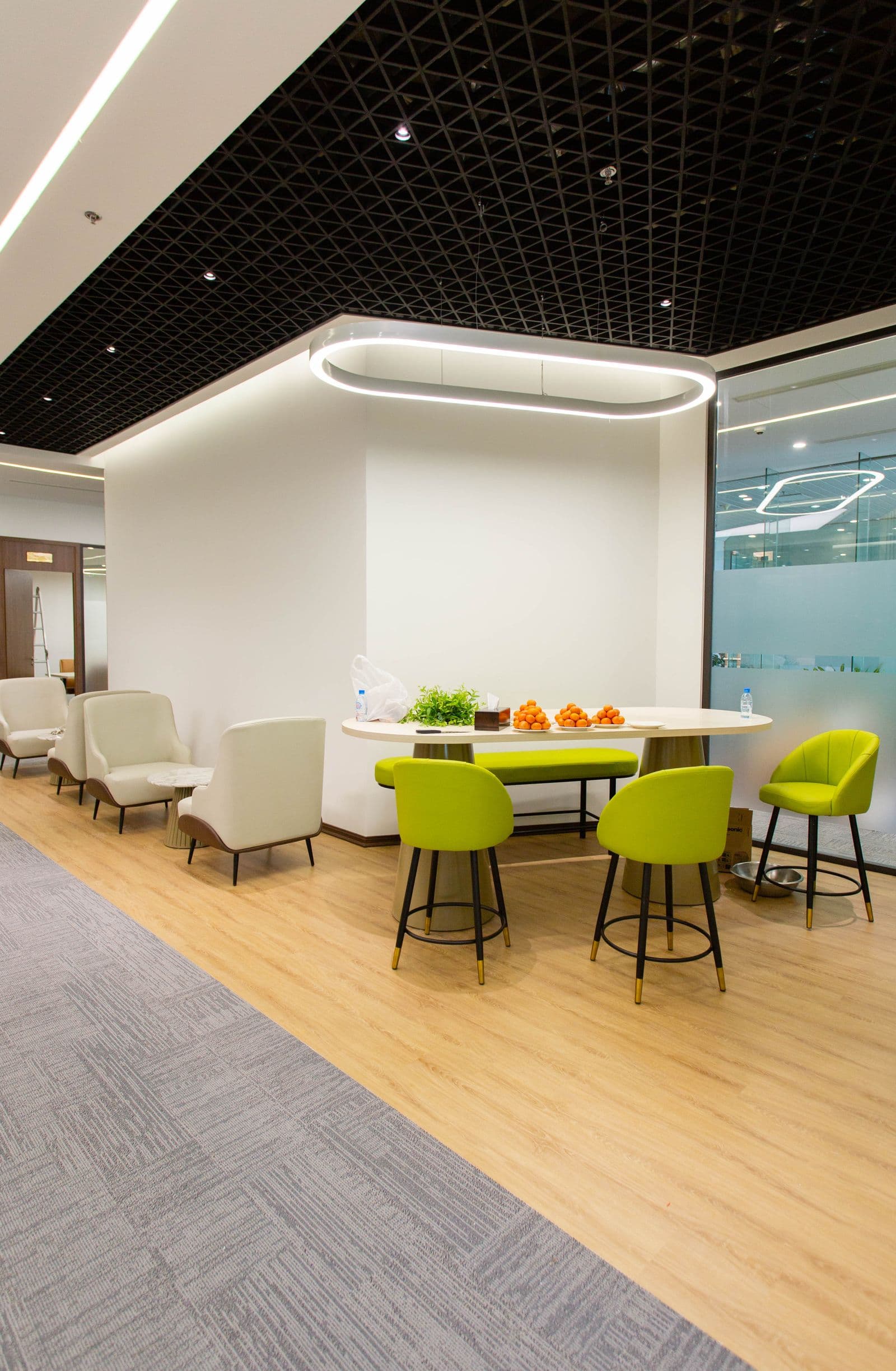
At Muze Office in Las Vegas, private-office flex plans come with the things a traditional lease would have you buying separately:
- Furnished desk, chair, and storage
- High-speed WiFi
- Utilities (electric, water, climate)
- Mail handling and a real business address
- Meeting room credits
- Free parking
- Cleaning
- Mobile app access
- Receptionist and cafe access
- Month-to-month terms
Coworking tiers also have predictable monthly pricing: Hot Desk is $129/month for any-desk access, and Dedicated Desk is $229/month for a reserved workstation and personal storage. See each plan for its included services.
Is a Flex Workspace Right for Your Team?
A flexible workspace is the right fit if you care more about speed, optionality, and predictable monthly cost than about long-term real estate control. It's the wrong fit if you already know exactly how much space you'll need five years from now and have the capital to build it out.
If you're in the first camp, the fastest way to evaluate is to see the space and get a concrete quote for your headcount.